Review of “Long Island Breakfast Club Show” (Online Show/Podcast) by Valentina Janek et al.4/1/2024 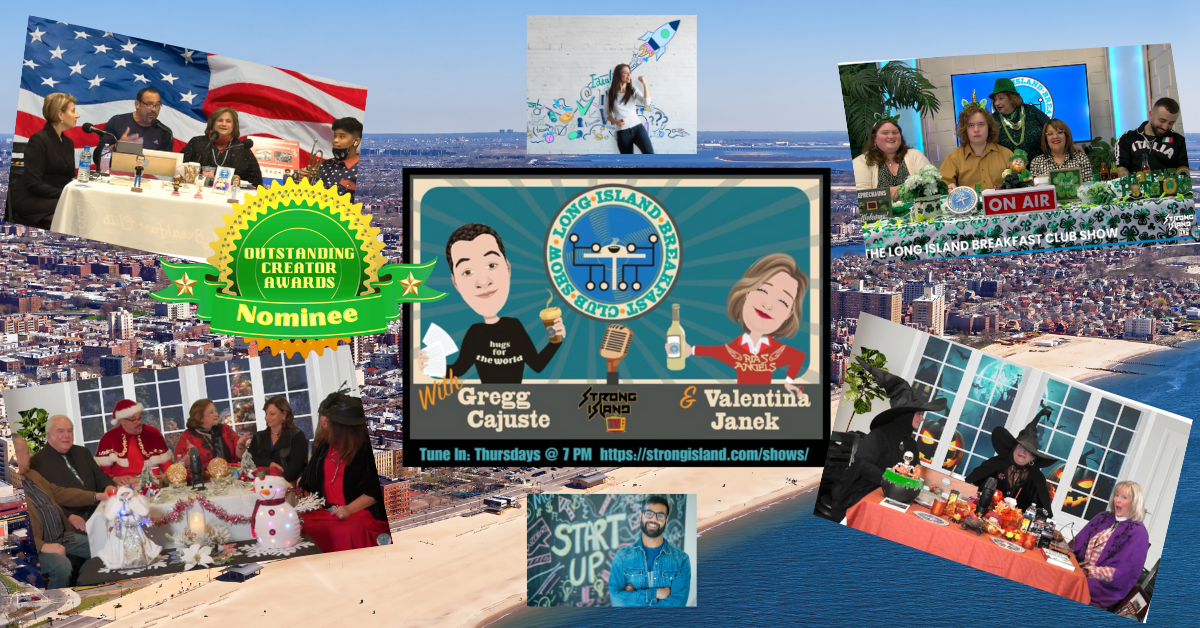 Score: 94+/100 (9.4+ out of 10)
The Long Island Breakfast Club Show is an online talk show by Tina Valentina and Gregg Cajuste that champions the concepts of entrepreneurship, networking, self-improvement, and learning from the experiences of others! If we were to sum up this podcast, we would say that this is a show about connecting people, inspiring people, and learning from people. At the heart and center of this whole show is really Tina Valentina herself, the lead host. Tina Valentina's real name is Valentina Janek. Under that name, she authored the incredible book titled From Fired to Freedom (which gained a near-perfect score from us), bolstered by contributions from many of her fascinating guests and their many intriguing stories of life after leaving their prior careers. As Valentina reveals to the audience in an episode, her nicknamed “Tina Valentina” actually came from someone at a bar. The nickname stuck as a catchy way to market herself, and we have to admit that it's catchy and brilliant! We know from her book that Valentina had left her prior job/career, but we also learned from an episode of this show that Valentina's long-time husband had passed away several years ago, around the time she started the show. So, hovering above this whole show—and woven into the fabric of everything that happens in it—is the idea of branching out and starting anew after what some would consider tragic or unfortunate circumstances (like the loss of a loved one and/or a job). It's true. It often takes our lives and careers to be totally shaken up and upended for us to really venture out and discover ourselves—our true, authentic, and most fulfilled selves. And you never know who you'll meet along the way! In fact, not only did Valentina start the show and make a name for herself after her prior career and becoming widowed, she also met a partner named Patrick who is acknowledged in an episode as being the source of a lot of the host's newfound happiness. So, a lot of great things can come out of tragic and unfortunate circumstances. You never know how God and fate will use those circumstances to further a bigger, broader story and purpose. And perhaps it could be argued that rediscovering purpose is a theme throughout the show. Another aspect that weaves in and out of the show is a light Christian message. It never becomes overly preachy or didactic, but it does appear from time to time such as when Valentina describes the Christian meaning behind Partridge in a Pear Tree. Every episode of the show appears to be around an hour long, featuring at least two notable guests (often more). So, all in all, the show is very well paced and timed. Valentina appears to be a large part of keeping the show on track and well-paced, moving from segment to segment, section to section, and guest to guest with relative flow. There's even a moment during the recent Christmas episode in which she realized that a guest (Lenora's) hat routine was taking too long and detracting from the show, so she hurried her along and insisted they move to the next segment. That shows that Valentina is mindful of how a show needs to flow and not get stuck on any one thing for too long. Something that might go unrecognized or unappreciated in regard to the show is the entrance music/theme song. This fun little jingle is actually not just generic stock music like some YouTube channels and Twitch streamers use! No, it's actually music produced specifically for the show. In fact, if you listen carefully, the song even introduces the audience to the two main hosts: Valentina and Gregg. We actually really liked it! It took viewing multiple episodes a few times to where we started to notice and appreciate the song. The brilliance of the show's logo is also likely to go unrecognized and unappreciated. The logo forms a smiley face using a steamy bowl of food (fitting because a lot of these people met over food) and branches that look like a networking tree (fitting because this show is about connecting with people and networking). However, one thing that will definitely NOT go unnoticed are the incredible decorations and setups that adorn the foreground and background of each and every episode, particularly the holiday ones! The Christmas episode features an actual Santa actor, costumes/outfits, an angel, snowmen, flowers, a wreath, a Christmas tree, snow, and even a bright, beautiful tablecloth to boot! You KNOW it's Christmas by just looking at the set designs. We also wanted to mention that the set appears to always change, even on the same month and when celebrating the same occasion! So, a lot of thought, effort, and attention-to-detail goes into it! During the 2024 St. Patrick's Day episode, there was green, clovers, and shamrocks everywhere! During the 2022 Thanksgiving Day episode, autumn leaves and an adorable Tom turkey decorated the table. The Valentine's Day set up had hearts and red sprinkled all over. There's even a plush animal and a card. Apparently, the person responsible for all of these set decorations is named Susan (or Suzanne), who the hosts call “the grease behind the wheel.” We agree! She really makes the whole show look like a higher-level production just by virtue of what she adds to the presentation! Another person who probably deserves credit and attention is Chris, who is described as the IT/computer guy who helps to get all of these videos to look the way that they do. We're assuming that probably also includes the backgrounds and green screen effects, which are seamless by the way. They really add to the quality of the production and presentation along with Susan/Suzanne's work. A third person who really deserves praise for this show being possible is Bobby Lucero, the person who runs the amazing studio where the episodes are filmed. Apparently, the studio is a popular party location. The studio really adds to the production value. We've actually seen what happens to a show's production value when it moves from a high-quality filming location (likea studio) to a low-quality one. This is definitely a high-quality one. Also, there are occasionally guest singers and musicians who add to the theme, spirit, and feel of whatever holiday a particular episode is happening around. For example, a Christmas episode features two great live performances by a singer named Bob Damato including a beautiful closing rendition of Chestnuts Roasting on an Open Fire. Damato also performs in other episodes as a kind of in-house musician. The 2021 Veteran's Day episode even featured a trumpet performance by a younger performer named Jayden, appropriately playing Taps in honor of the troops. The pandemic-era Halloween episode was able to incorporate a more creative, cinematic, and comedic approach with the help of some amateur filmmakers/fitness enthusiasts. The opening featured a few jokes that actually managed to land such as when the actor playing a mummy says that the virus is especially dangerous for him because he's 1500 years old and when he is exploited for his wraps because of the shortage of toilet paper. Now, that's genuinely funny! Aside from Valentina herself (and Gregg), what really drives the show are the extraordinary and fascinating guests! Similar to From Fired to Freedom, the Long Island Breakfast Club Show is bolstered by many of these same guests and contributors, each with their own stories to tell! And do you remember how we mentioned that Valentina got her nickname from some guy at a bar? Well, it seems like many of her extraordinary guests are people she met at a bar, at a bakery, in a restaurant/diner, or snack shop! It's kinda a running joke, and we can't help but laugh and play along with it. These hosts and guests LOVE food! A lot of the show seems to revolve around food. In fact, a key segment of some episodes is the “breaking of bread” (usually Italian bread) with guests, shown as a way of the hosts bonding with their guests. In other words, come prepared with some snacks or food of your own cause these guys will make you hungry! She even met her publisher, Stephanie Larkin of Red Penguin Publishing, at a cookie shop! A few guests specifically appear with food as their main topic. One invented a special, tasty sauce that can be placed on both empanadas and ice cream (imagine that)! Another guest started a baked goods/snack brand called A Trace of Sweetness (a play on her name, Tracy/Traci). This guest was inspired after their niece asked them to bake them something special for their wedding/bridal shower. This shows that something big can come unexpectedly from something small! This person also teaches nutrition. In a great line, she talks about how the key to her teaching approach is how she makes the subject about her students. So, if they're athletes, she makes it about how certain nutrients can impact their performance. We feel like many of the guests have overlapping or similar interests (well, other than food) with the three keys interests being entrepreneurship, writing, and film making. There are a lot of writers, authors, filmmakers, actors, and actresses among the show's guests, some of whom connected with Valentina at film festivals. Others just so happen to run businesses of their own. One of the guests is the director and co-producer of Pancakes of Syrup. One guest is an actress from They Devour and iCarly. One guest is an actress in Necromancy. One guest is an actress in Good Samaritan. Valentina herself was able to use her connections to be an actress in at least three films including one that reflects her experiences with a corrupt politician she once worked for. One of the regulars of the show is an ex-exterminator who became a comedian and now runs two shows: The Thrill of the Kill Podcast and Cooking with Comics! Valentina may have connected with this comedian when she was working with Governor's Comedy Show (despite claiming that she's not funny or comedic). There are subtle ways in which Valentina shows herself to be funny such as when she admits to a certain dog not liking her, saying, “That dog need Zanax because it hates me.” There are also quite a few authors among the guests including the author of The Ties That Bind. But we wanted to focus on the guest who amazed us the most of all: Karen Quinones, the founder of Bridging the Gap in Esports and the author of Confessions of an Esports Mom. Remarkably, this former correction's officer left her career in correction's to support and capitalize on her son's passion for Esports and AI. She gives us the extraordinary quote regarding AI: “The horse is already out of the barn. It isn't going back in.” In other words, regardless of how you feel about the advancement of AI—whether you love it or hate it—it's not going back to the way it was before. So, you should seek to learn more about it and advance with this new technology. The second guest that we really, really admired and fell in love with was Lana Noone, who appeared in the 2021 Veteran's Day (11/11/21) episode. Lana Noone enlightened us a lot about Operation Babylift, which, during the end of the Vietnam War and the fall of Saigon, numerous volunteers with Pan Am assisted in the evacuation of 3,000 children from Saigon in 30 days! It's one of the greatest yet lesser-known humanitarian efforts of the 20th century. There were about 15 babies per volunteer. One of the babies even grew up and met some of the people who saved her! Gerald Ford even took pictures when the babies arrived. The way that Noone spoke and presented this information was also top-notch. We wondered why she didn't run for office! She was such a great speaker. Something else we learned from this presentation was about how Gerald Ford was actually adopted and, like many of these guests, was able to turn lemons into lemonade! They are really working on improving their presentation, production values, and line-up of guests. In fact, the difference between their 2020/2021 episodes and 2024 episodes is clear. Perhaps what they really need to step up their game with is expansion, distribution, and exposure. It was genuinely difficult to find them and watch their content until about 2 weeks ago when they started releasing more of their Facebook episodes to YouTube. Facebook is generally not the greatest video-streaming platform. It's simply not set up for things like background play or sharing to a broader audience on other platforms (the way that YouTube and Twitch are). It's also hard to keep track of the episodes. One other way in which this show could improve is in using graphics or tags to indicate who is who. We were so mixed up and confused about what the names of the various people on the show were, especially one-time guests. Maybe having a box appear at the bottom of each person or a brief cutaway to a graphic describing who they are might help. You know like how news outlets do it? Anyway, this is a worthwhile show with a lot of fascinating, insightful guests. Check it out: Website YouTube
0 Comments
 Score: 93/100 (9.3 out of 10)
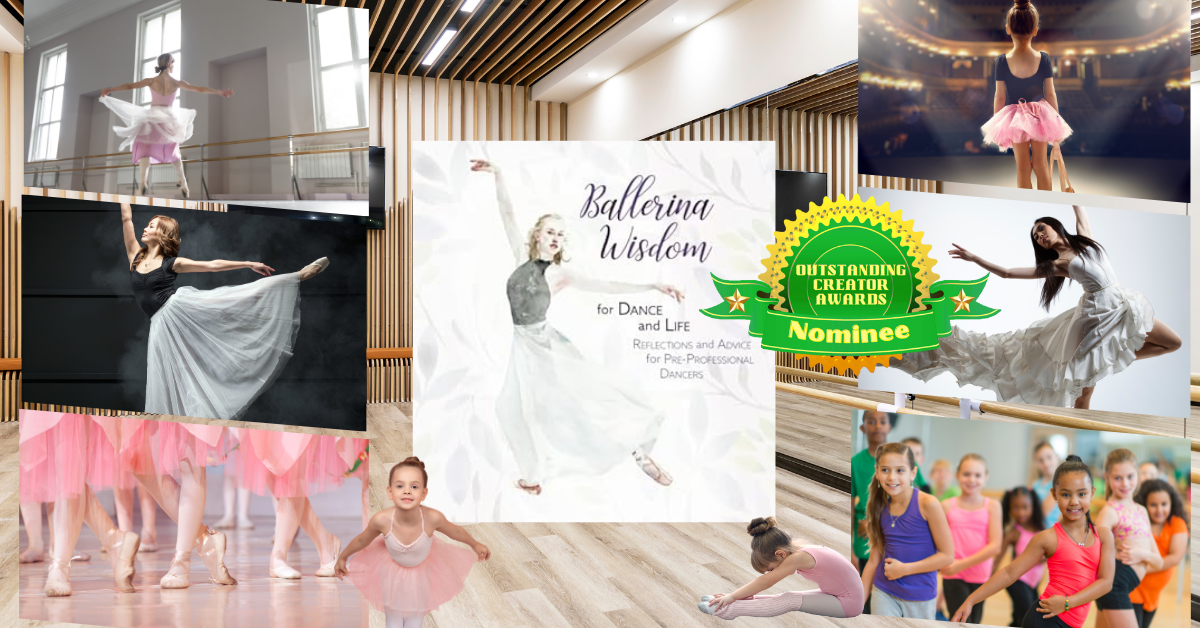
Here's a book that made us stop, think, and go hmm...! For years now, the mother-daughter team at Once Upon a Dance has blessed us with some of the brightest, boldest, and most beautiful children's books to ever come our way! All of them seek to take the concept of dance and marry them with colorful characters, brilliant art, and compelling stories. However, Ballerina Wisdom for Dance and Life, is quite a bit different: it's actually more like a short manifesto on the experiences of being a performer. Yes, that applies to all sorts of performing arts, not just ballet or dance. This is very special and very valuable as it comes from a mother-daughter dance team with a combined decades of experience! You are learning from people who have been there and done that. You are learning from people who've walked the talk. We are so used to seeing Ballerina Konora at her best. She is so graceful, beautiful, and gorgeous. Her movements seem so fluid, effortless, and elegant in every single other book. It's easy to see a performer as amazing and seemingly flawless as Ballerina K and think, She makes it look so easy! Maybe she's just a natural. I can't do that. I can't be that good. It's easy to forget that even the best fall down sometimes and have ups and downs. Like with many other careers, being a performer is a journey with a lot of peaks and valleys. It can be a roller-coaster ride with many lessons to learn along the way. That seems to be the premise of this book: to enlighten, inspire, and remind up-and-coming performers that they're on a journey--a journey that isn't linear or without setbacks, yet one that is hella worth it. It's a journey that often winds and weaves. It's a journey that takes patience, commitment, dedication, and discipline. One such lesson we took away from this book is that it's important to put in the work: be early to rise and late to fall. That may sound straightforward, but many say they want to pursue a passion yet don't put in the time, energy, and effort toward pursuing it. It's not outright written in this book, but Rome wasn't built in a day. Simon Biles didn't become the greatest artistic gymnast overnight. Time, effort, energy, commitment, and persistence are what make a person great. It's a mindset: getting better every day. One lesson that surprised us in a book about performing was the one about giving grace and acting with kindness. However, it makes sense if you really think about it. Success and longevity have a lot to do with who you know and networking. You might not want to hear that, but it's true. And what's the best way to make and keep friends? Make people happy. Be kind to them. Be giving. Nurture relationships. For example, maybe you had a dance partner early in your career who is now with Disney or Cirque du Soleil who can now connect you with agents. Or maybe your ballet teacher can serve as a reference toward a new job. Listening to your body is also a great lesson for both performers and athletes to learn. You need to be sensitive to what your body is telling you. You need to realize that you will do better when you work with your body rather than against it. Sleep, eat well, and tend to sore spots and injuries. Don't ignore problems. Also, take time to relax and de-stress. Probably the most surprising and interesting lesson that we saw in here was to ask for what you want. So many people don't know their self-worth or value. They're afraid to ask for a raise or promotion. They're afraid to apply for a better job. They're afraid to try. However, you never know if you don't try. You're also very unlikely to receive if you don't ask. This is a really interesting book. Apparently, it's part of a ballerina wisdom series, a kind of sidebar off of the Once Upon a Dance series which focuses more on performing itself. If there's some small, constructive criticism we could provide, it's that we'd have preferred if the illustrations were simply clear rather than abstract (which seemed to be an artistic or stylistic choice). The reason is that it distracts a little bit from the text, which is also slightly on the wordy side. The italics may also be a little bit of a challenge to read when also paired with the abstract figures. That type of illustration is usually better paired with very short phrases of maybe 1 to 10 words, usually bigger, bolder words. The reason for this is that the text needs to stand out more when the graphics are less sharp or when more is happening on the page. However, older children and adults can definitely read this from cover to cover. They can definitely take something enlightening away from this. It can also be comforting just to have books available on the topic of being a performer, helping to inspire and nurture a new generation of dancers, ballerinas, gymnasts, and more! If you or your child is an up-and-coming performer who needs a jolt, check this out on Amazon! 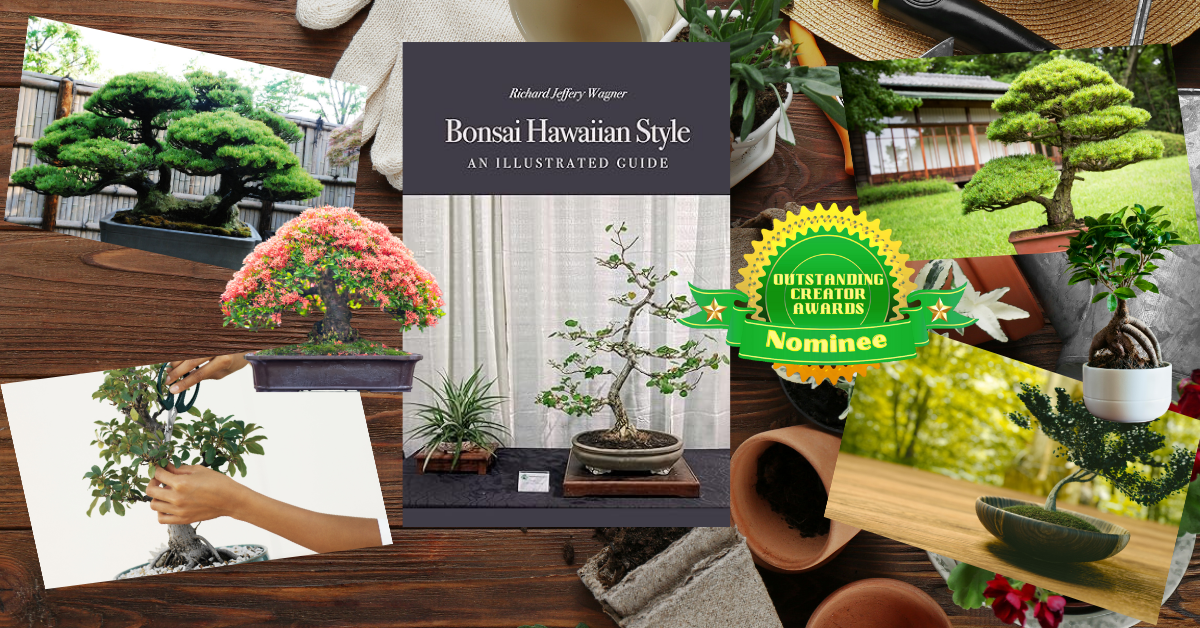 Score: 95+/100 (9.5+ out of 10)
You know, there's a reason why the main character in Candide by Voltaire—despite his wild, exciting, and turbulent life—became a gardener near the end of his life... there's just something about gardening that's so fulfilling, relaxing, and strangely encouraging. It's something to work on and to strive toward, comparable to something like golf or knitting. However, while with golf you're working to improve your game, and with knitting you're making stuff like scarves, gardening has the added benefit of the practitioner interacting with another LIFE: a plant, a flower, a tree, etc. You can work on that other LIFE, enhancing it, beautifying it, protecting it, helping it to grow and thrive. It's almost like raising a pet, in a sense. It's with that in mind that we come to Bonsai Hawaiian Style: An Illustrated Guide by Richard Jeffery Wagner. You wouldn't expect a book about bonsai trees and how to grow them to be THIS interesting or captivating, but –again—there's just something about it. Furthermore, Wagner (the author), approaches the subject with so much pizzazz and passion that it's infectious! It impossible to ignore! It helps a little bit that our founder is from Hawaii and has experience with bonsai and many of the different varieties. However, there's a lot that we didn't know. We learned a lot from this book. We didn't know that Hau wood was used for outrigger canoe floats. In effect, this would make these integral to the movement of the original Polynesians to the Hawaiian Islands. We didn't know Kukui was useful for making candles and medicine. We didn't know that macadamia isn't Hawaiian but actually from Australia! In fact, that was quite a surprise! We didn't know about the concept of Jin as it relates to bonsai. We didn't know about Kamani wood being good for making bowls or that the first Polynesians brought seeds of it along for that very purpose. What foresight! We don't give these ancient travelers and navigators enough credit. We didn't know that certain kinds of plants/trees could be grown in bonsai form including lychee, mountain apple, plumeria, and sandalwood. For some reason, we usually associate bonsai arrangements only with small bamboos, like the ones they sell at some stores here in the continental United States. Apparently, you can grow a lot more in bonsai form. Also, apparently, bonsai is so much more than just growing silly little trees. It's actually quite elaborate! In fact, there are even shows and contests/competition for bonsai and bonsai arrangements. So, reading this was almost like reading how to get your daughter ready for their first beauty pageant (or how to get your son ready for his first bodybuilding show)! It really does read that way! If you're into farm fairs, there's a bit of those vibes too. It's about aesthetics, challenge, precision, and sometimes even experimentation. It's about knowing what works and doesn't work. It's about knowing what's possible, impossible, or highly improbable. Speaking of impossible (or highly improbable), there are certain challenging breeds of trees that either can't or most likely won't grow in a bonsai arrangement including coconut, banana, avocado, and papaya. For one reason or another, they just won't grow in this scenario. However, we can't help but feel like the author is still daring or challenging ambitious bonsai people to try it out for themselves. That's where experimentation plays a part in this. In fact, the author even admits that they've tried to grow some of these, sometimes multiple times despite the odds. We're guessing it's kinda like discovering Excalibur, finding the Loch Ness Monster, running a 4.2 40-yard-dash, or solving the country's debt problem—the fact that it seems impossible just makes it more tantalizing. This book also went into some of the nuances of bonsai like the different kinds of things you can fill the pot or box with like basalt, sand, potting soil, and even this things called “super soil.” The pots themselves have their own nuances. There's this variety called a terracotta pot with wooden legs glued to it that can make your presentation extra fancy. There are ways to decorate the pots with rocks and stuff. There are glazed and unglazed pots that have different advantages and disadvantages. Boxes can be fun and cool, but the author is quick to remind the reader that boxes also rot faster. The author includes warnings about following the “small leaf rule.” Pruning is a huge part of bonsai. Another warning that the author gives is about planning both your pruning and wiring—especially your cross-wiring. If you don't plan out your wiring, you're going to leave marks and bruising on your trees. They're not going to grow to the best of their abilities. Another great thing that this book does is how to construct your own bonsai growing bench, all the way down to the brass screws. We really, really, really wish that the author had gone more in depth with the actual bonsai plants, arrangements, and ornamentation like they did with the growing bench. A lot of the time, it seems like the author is just touching on topics. This isn't an unabridged or encyclopedic book about bonsai, and it really could've been! We've said in the past: if you're going to write about one thing, go ALL IN with that one thing. One of the worst phrases used in this book is “beyond the scope of this book.” Yes, this phrase is only used once, but it points out how we kinda felt like the author was dangling a carrot in front of us and not letting us eat it. They would start talking about a type of bonsai, then go on to the next one. Wait, how can I have my own lychee tree? Can we go back to that? Why stop short? This is especially the case if you're going to charge textbook-level prices for a book. As an aside, we would recommend that the author consider a black-and-white version of the book that would be more cost-effective. But we digress. We understand that this is kinda a book that's supposed to get you interested and engaged with the subject. You're constantly invited to go do your own research and check out one of the author's many recommended sources (books). A part of us just kinda wishes it was all here. The author reminds us that “Few things in life improve with age, but bonsai are one of them.” Lastly, we have to give credit where credit is due with regard to the pictures and illustrations. They lose a little bit of quality from their conversion to book format, but they really enhance this book. So, maybe we can make like Candide and get into growing some trees! Check it out on Amazon!  Score: 86/100 (8.6 out of 10)
Ultimatum by Vladimir Fleurisma is a sci-fi, dystopia, post-apocalyptic novel that follows a group of rambunctious marines 50 years after an apocalyptic war. Though the first half of this book is incredibly slow-moving and reads more like an edgy romance or erotica, the second half of this book is much more action and adventure-oriented. So, we don't mean to be rude, but... is this supposed to be a comedy? Is this supposed be like Shaun of the Dead? We ask this because—for a book that's supposed to be featuring mutated beasts, people suffering from a lack of natural resources, and a post-apocalyptic environment—it's incredibly unserious and, honestly, a bit goofy. We thought this was going to be an action-packed book about a bunch of marines living in a post-apocalyptic world being menaced and constantly fighting off hordes of mutants and monsters. Well, in concept, that's what it was drawn up to be. And, yes, there's some of that, especially near the end of the book. However, the narrative seems A LOT more concerned with the sexual exploits, love-triangles, and personal feuds of the different marines, particularly the female ones. So much of this book revolves around these women getting mad and going crazy over something and wanting to beat up the others, either out of spite, jealousy, malice, or any other reason a woman might want to beat up another woman. We were actually kinda shocked. We get that, maybe, that was supposed to be the author's way of developing these characters as having pet peeves, insecurities, and motivations, but that all came across as very unfocused. A lot of this seemed to lack focus. It played out more like a bunch of immature teenagers who are still struggling to understand their hormones. Aren't these supposed to be battle-hardened adults? We get that even adults can be petty, but some of these characters acted like they were teenage cheerleaders and jocks in a stereotypical high school movie. So much of this book consists of these characters wanting to have sex with another character (usually Cella, who is a candidate for “Hottest Character”), being fixated over their hairy, sweaty, odorous body-parts, or playing video games. Yes, video games. A large portion of the middle of this book is dedicated to a combat video game and its complicated button sequences. Don't these characters have other things to do? Don't they have other things to think about? Don't they have other things to be worried about? Like, shouldn't they be worried about being irradiated or eaten by one of these zombified mutant creatures? Shouldn't they be concerned that their leaders and coalition might be leading them into a totalitarian New World Order? It's so hard to care about the plot or the characters when the characters themselves don't seem to care. They'd rather talk about their genitals, vibrators, lube, fruit juice flavors, and game controllers most of the time. Is this a book about soldiers living through the apocalypse or a book about the nerdiest girl in school getting a makeover so she can get the starting quarterback to take her to prom? That's kinda the vibe we got from this. It's a book about a bunch of horny, immature idiots who happen to be the last of us. Perhaps that's the point. What happens to humanity when the last people who can procreate and fight for our survival are superficial, jealous, spiteful, flaky, scatter-brained morons? That's where the Shaun of the Dead comparisons come in. Like Shaun of the Dead, maybe this book was never meant to be overly serious. It was meant to be funny, humorous, and entertaining. And this book does have some bright spots. First of all, Cella is usually pleasant to read about. D, who is supposed to be the main protagonist, is at least somewhat down-to-earth and usually acts as the voice of reason when Jade, Sabrina, Rita, Cella, Zach, Hank, Rick, and Colt engage in shenanigans. Perhaps the best dynamic in the entire book is between D and Jamie, a particularly strong woman. It is implied that Jamie may actually be trans. In any case, there's history between D and Jamie as former track rivals at the academy. Both were among the fastest sprinters in the academy. They went back and forth setting and breaking the record, which was very controversial. Another great part of this book are the monsters themselves, the “Uglies” who stand between 9-11 feet tall (with alphas being as tall as a T-Rex). There's also a clever, sci-fi explanation for their existence which we appreciated. The world-building in this book is decent. In fact, this world doesn't seem like Earth at all. It's like an alien planet—an alien planet full of perpetually-horny idiots who are supposed to be disciplined soldiers. The humor can also be quite funny. Our favorite line in this book (which somewhat personifies the whole thing) is: “They're eating people and throwing them at other people.” The reason why this line personifies this book is because it takes a dark, violent, and gruesome thing (mutants attacking people) and makes light of it by virtue of how its framed and worded. Another funny line is: “Kellen, I'm going to count to three, then you're going to stop being a pussy...” A third funny part is when a soldier accidentally gets ten of his comrades killed and another impaled in the leg with rebar, only to be told, “Dammit, Dom. Don't do that again” as if all he did was pay his credit card bill two days late. It has the tone and vibe of a Seth Rogan movie. If you want a funny, entertaining dystopian book about a bunch of intergender soldiers and their shenanigans on a dying planet, check it out on Amazon! 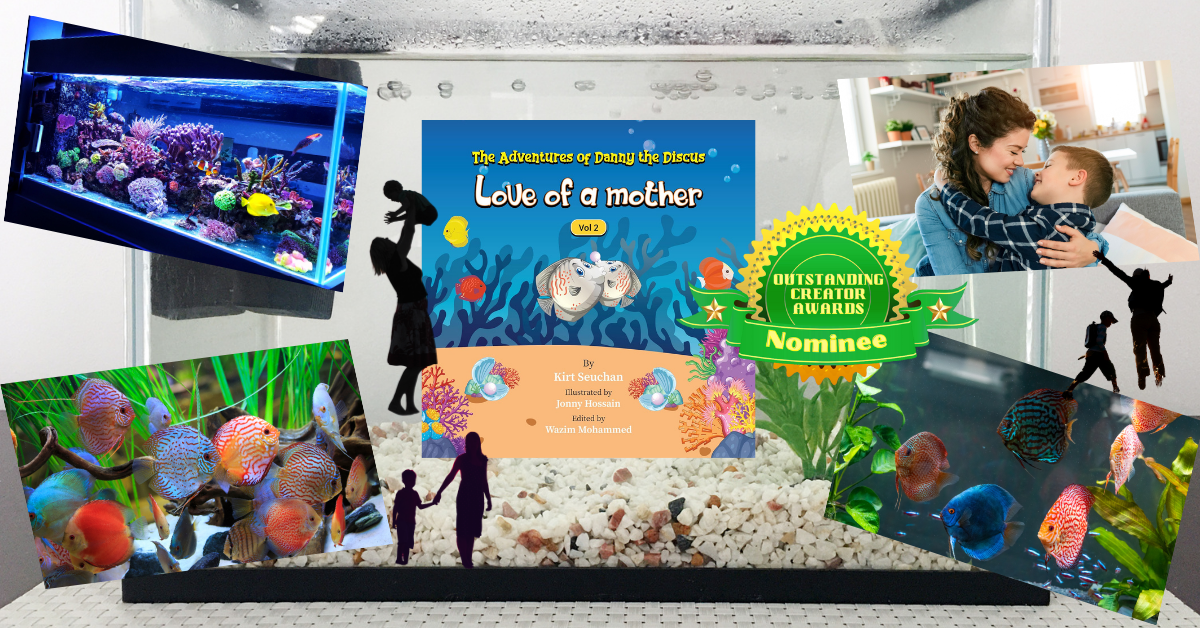 Score: 93/100 (9.3 out of 10)
There's nothing like the love between a mother and her child! The Adventures of Danny the Discus Volume 2: Love of a Mother centers around Danny, a discus fish living in a pet store aquarium with his mother. Danny and his mother were purchased from a discus fish farm in Thailand and were fortunate enough to have made it to the same pet store and aquarium together! They have many fish neighbors and a friendly fish store owner named Mr. Chan, but nothing is more precious and valuable than the bond that they share with each other. They play together and swim together on a daily basis. One day, hidden between the sea anemones at the very bottom of the tank, Danny discovers a treasure: a shiny pearl! Danny is apprehensive to try to get it, probably because its so heavy and because of the obstacle that the anemones may pose. He still dreams about obtaining it someday, not because he wants it for himself but because he wants to give it to his mom to show her how much she means to him. In hopes of making her happy, Danny conquers his fears and pursues the pearl. He is able to suction it with his lips in order to lift it and bring it to his mother. However, he's surprised that the reason that his mother is so elated and happy isn't because of the pearl itself, it's because of Danny's thoughtfulness and the love that he showed in getting it for her! This is a brief yet beautiful story. It is very heartwarming. If we were to share a criticism of this book, it's that the draw distance is too great. The lens from which we see the action is very big, meaning that we get to see a lot of the tank and what else is happening in the aquarium, but the central action and characters are out of focus. We'd preferred if the illustrator had zoomed in and focused on Danny and his mother like the narrative seems to. Trying to find your main characters on a page shouldn't be challenging (unless it's like Waldo), they should be front and center. They should be the second biggest thing on the page next to the background. With that said, this is still a beautiful and charming book. The illustrations are bright and colorful. The characters look friendly and inviting. Most of all: it has a powerful message. Check it out on Amazon! 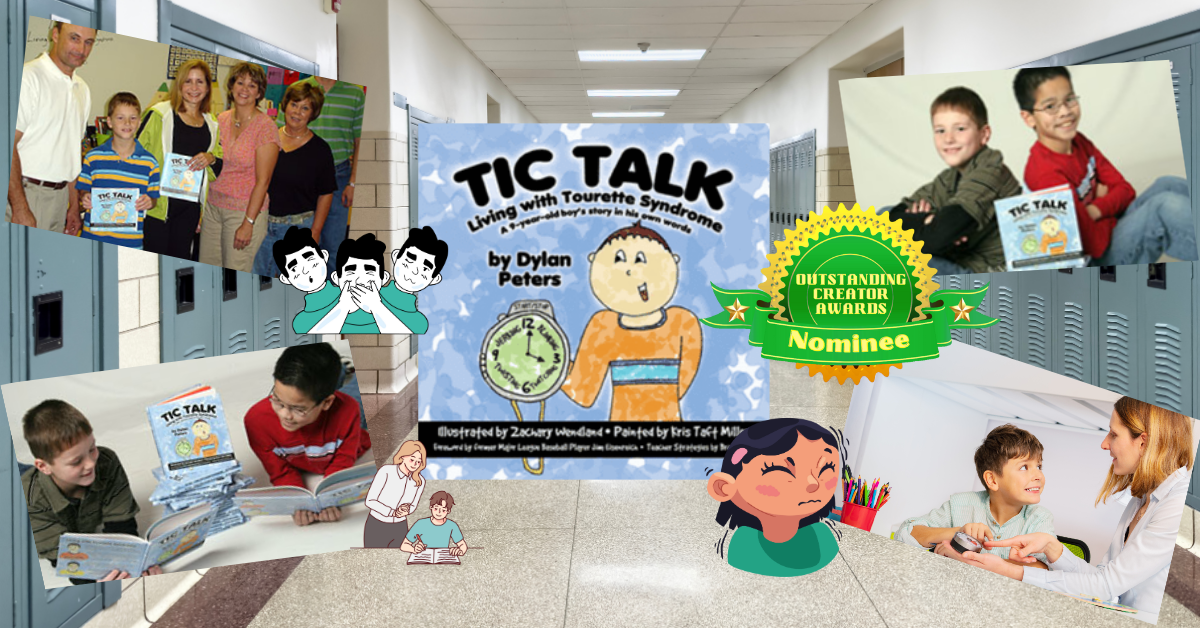 Score: 88+/100 (8.8+ out of 10)
Tic Talk is an inspired, spirited, and eye-opening book by Dylan Peters concerning the topic of Tourette Syndrome! This book seeks to remind the world that every child deserves a chance including those suffering from a disorder like Tourette's, a neurodevelopmental disorder that results in abnormal, uncontrolled movements and vocal sounds called “tics” (giving the book its title). It only takes one caring, patient, and understanding person (particularly an educator) to change a child's entire life. We saw that happen in Jar of Tears by Kathleen Templeton earlier this week in which a teacher, Mrs. Davis, was the first to recognize what the child (Mira) was going through, giving her a non-judgmental ear to express herself to. In Tic Talk, it's Mrs. Rita Sudalter who recognizes that there's more to Dylan than meets the eye. Mrs. Sudalter recognizes that there are underlying reasons for Dylan's otherwise-strange and unsettling sounds and actions. Rather than dismissing him, being annoyed with him, embarrassing him, or even punishing him, Mrs. Sudalter does what other educators failed or neglected to do: be understanding and give him a chance. Dylan was diagnosed with Tourette's at the age of four. As the book explains, the disorder causes Dylan to uncontrollably and unexpectedly jerk his head, gurgle, and clear his throat. This behavior seems strange or weird to some who view it as attention-seeking or annoying. However, the people who rush to these conclusions likely don't understand Tourette's or the fact that it is often out of the person's control. And that's where this book shines the most: in raising awareness and understanding of Tourette Syndrome, something which—quite frankly—few people in our society know much about. In fact, most people's views on Tourette's comes from YouTube videos and television shows in which Tourette's is often shown to be part of a joke or as comedic relief. The truth of the matter is, it's not always funny or humorous for people who actually suffer from the disorder. In fact, it can be saddening, maddening, and upsetting. If people only knew the truths about the disorder... that it's out of the person's control and that it doesn't make a person unintelligent, autistic, sick, bad, dangerous, or scary. The book even makes the point that Tourette's isn't contagious like a disease or rabies and that you can't get it just by associating with someone. Adults with Tourette's might even lead people to jump to the conclusion that they are on illegal substances (like drugs) when that's simply not true. Conceptually, this book is powerful, beautiful, and brilliant. There's a bit to be desired in terms of the execution though. One of the things that really sticks out are the illustrations, which were done by a childhood friend of Dylan named Zachary Wendland with some paintings by Kris Taft Miller. They do leave a little to be desire. However, we understand that Zachary is still young and working on his craft. We've seen images of Dylan and Zachary working together on this book (and promoting this book) as kids, so it's easy to understand why they chose this route: they're a team. From what we gathered, neither Dylan nor Zachary are kids anymore. In fact, we're told that Dylan has already graduated from high school with numerous honors and academic awards including a National Merit Scholar Award. He has probably graduated from college by now seeing as he entered college before the pandemic. That's really inspiring! And it goes to show that you can make lemons out of lemonade, as the book tells us. Your situation—good or bad—is what you make of it. The book also does a good job at demonstrating that we're all weird and different in our own ways, not just those with Tourette's. In fact, during a class lesson, the different students all talk about ways in which they are different. For example, one student is short-sighted and wears glasses. This is a very inspiring book that could be great for parents of children with Tourette's! It could also be a part of classrooms in which teachers could educate their students about it. Check it out on Amazon!  Score: 95/100 (9.5 out of 10)
Mount Tremper has a Temper by Thomas O'Grady & Karen Chapman is a children's book that captures the undeniable appeal of the Catskill Mountains in the state of New York as well as telling a beautiful and powerful story about uniqueness and individuality! The book centers around the titular Mount Tremper, one of the smaller of the Catskill Mountains (“not even in the top 100 highest”). Tremper is described as a small, tea-cup shaped valley surrounded by bigger mountains. You really get the sense of the oppressive atmosphere that Tremper lives in. It is personified as harboring some anger, frustration, and resentment (having a “temper”) at being smaller than the other mountains and, thus, being overlooked by visitors. It is notably excluded from the “3500-Foot Club” since it is less than 3500 feet in elevation. There is also a strong sense that Mount Tremper has experienced this exclusion and hard feelings for a long time since he is called “little old Tremper.” However, Mount Tremper is special, unique, and beautiful in ways that he has long overlooked. For example, Mount Tremper is home to many incredible plants and animals, namely squirrels, eagles, butterflies, rattlesnakes, ravens, deer, and even bears! It also provides one of the best hikes in the Catskills, which is great exercise. It is home to two lean-tos where people can camp when they visit. It even has its own rock quarry! We really enjoyed this book and learning about the Catskills! What we enjoyed the most about this book were the illustrations by Karen Chapman! They were some of the best of the season! In particular, we enjoyed the illustrator's animal art. The black bears are absolutely adorable and the rattlesnake is menacing yet cool. The raven and the squirrel are expressive as they react to Tremper's temper. We have a slight feeling that this book gained a lot of momentum, but never seemed to hit its stride. It took a while to get going, then ended rather abruptly. Maybe we were just enjoying it so much that we wanted it to go on for another 4-6 pages! When you look at the “Fun Facts” section, it really does seem like a lot had to be trimmed down either due to time or budget. There are a lot of things in that section that could have been expanded on and actually add some context to why Mount Tremper feels the way that he does. For example, the section talks about how Tremper's brother has a historically-significant fire tower while (we assume) he does not. And, as we said before, the description of Tremper being a “small, tea-cup shaped valley surrounded by taller mountains” is a much more impactful description than what is presented in the main section of the book. The other thing we noticed (and we're not sure if this is really a criticism) is that Tremper is probably the least cute and appealing of all the mountains that are personified. He has the face of an angry, obese middle-aged man for much of the book. This kinda makes sense because of his age, anger, frustration, and resentment. We were just wondering how children might respond (negatively or positively) to a character with a cuter or more appealing face. Really, though, it's not a big deal. This book is great, well-illustrated, and effective! Check it out on Amazon! 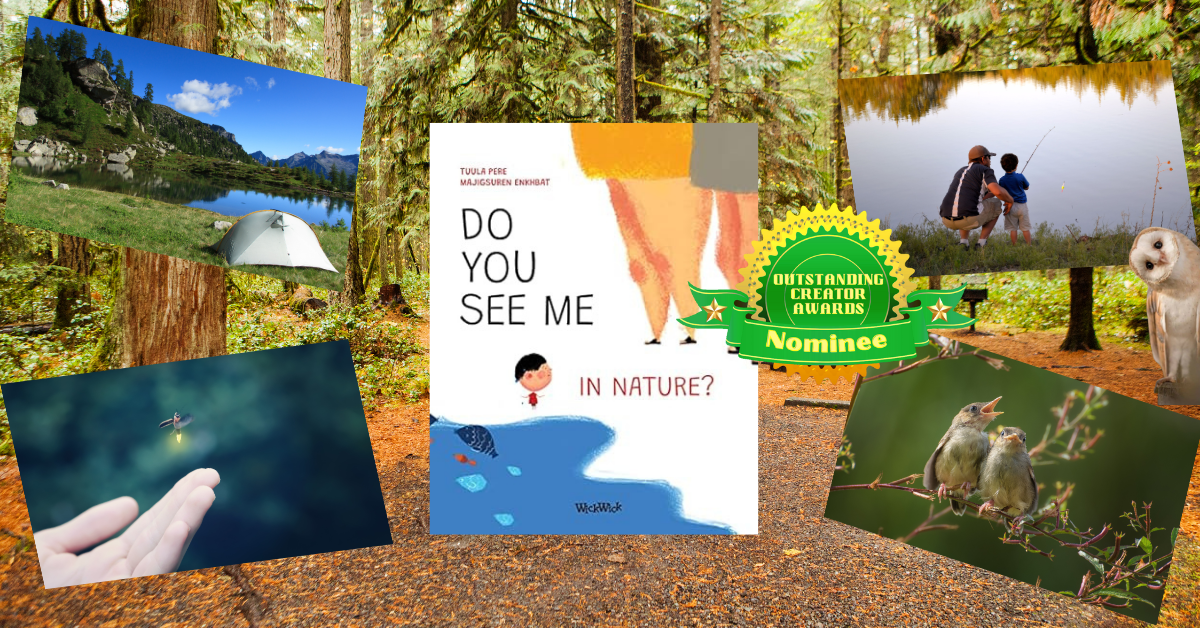 Score: 87/100 (8.7 out of 10)
Your first camping or hiking trip can be quite an experience! You could be caught off guard by all the bugs, especially the blood-sucking mosquitoes. You could get your shoes wet in a stream and wonder if the fish swimming in it are edible or if they could nibble on you! You might wonder what kind of bird (or birds) you hear singing their songs in the trees. You might wonder if the berries you found are safe to eat or if they'll even be tasty. You might be a bit scared by the hooting of an owl or the howl of a coyote in the middle of the night. You might be mesmerized by the sight of fireflies as they light the night. You never know if you never try! This book is a reminder to step outside of your comfort zone and try new things. It also continues the main theme of this series, that of a little boy who is comfortable being himself and living his life because he always has the love of his mother and family looking over him and facilitating his activities. This series seems to champion a Montessori-like approach in which children are invited to explore and learn through choice and spontaneity rather than via rigid structure and strict direction (such as in most schools). This is arguably how younger children learn best, primarily via activities like playing games, manipulating objects/toys, and making art. This kind of learning is less structured and more free. Arguably, people learn better when they don't realize they're learning. Everything is easier when you're having fun. Everything means more when you choose it and have a say in it. With that said, the Do You See Me? series is arguably our least favorite of Tuula Pere's brilliant library of books. It might have a lot to do with the art style in these books. The illustrations look very simple and bland in comparison to the ones in Pere's other books. These illustrations aren't as appealing as other books in the author's library. However, that's not to say that there aren't some bright spots. For example, the owl and squirrel look good in this. The other thing about this book, specifically, is that it seems a bit unfocused, disjointed, and random. One minute, we thought this was a story about the boy trying to gather and eat berries, but the berries become inconsequential or even forgotten later on. The boy in this book does a lot in this book, but a lot of these activities seem unrelated or not tied into one plot or plot thread. In fact, you could argue that this book has no plot. Now, having no plot is not the same as having no point. The point of this book, as we explained, is to try new things, step outside your comfort zone, and to learn through exploration. Meanwhile, guardians/parents should facilitate this kind of learning by being present while not being controlling, insistent, or forceful. Parents/guardians should give their children choices and options of things to do and try. When a child is uncomfortable or scared of doing something, like swimming, a modification or accommodation can be made, like swimming in the shallow part of the water. Check it out on Amazon! 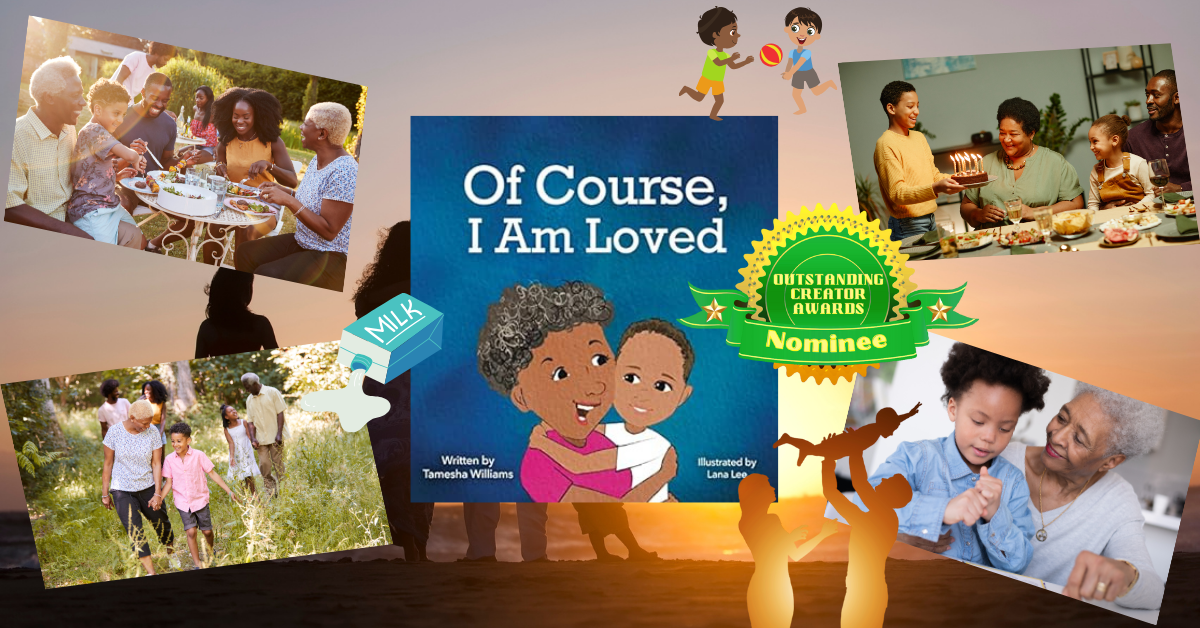 Score: 95/100 (9.5 out of 10)
We are a lot of things in this world. We are human beings with life, dignity, and hope. However, perhaps the most important thing we are in this world is LOVED. To be loved seems so cliché, generic, and matter-of-fact that's it's easy to take for granted. But what does it really mean to be LOVED? Is love always kissing, hugging, and romantic sort of things? Or is love something else—something that can be both big and noticeable while also, sometimes, being small and easy to miss. It's true! Often times, love is in the little things: how we treat others, how we talk to others, cleaning for others, cooking for others, spending time with others, listening to others. Love is in the choices we make (or don't make). Love is in every fabric and layer of our most precious and valuable relationships. Love may be the most valuable thing we have alongside life itself. And that's what Of Course, I am Loved by Tamesha Williams is all about: realizing, recognizing, and acknowledging the love that's all around us and knowing that we are valued, significant, and important in the eyes of those who love us. That might seem like a lot to swallow, but it's true. Many times, we just don't realize how much we mean to people and how much love we're surrounded by. This book follows a little boy who hears his family members use the word “love” all the time. Yet, he isn't quite sure what it means. Meanwhile, there are a lot of demonstrations of love shown throughout the book. For example, his family makes a lovely breakfast for him, even giving him a choice between eating eggs, pancakes, and oatmeal. How blessed this kid is! He's so fortunate! His dad puts aside his need to watch a show on TV to let the boy play his drum, knowing how much it means to him. His grandma cooks for him and even reads a book to him. When he spills his juice, presumably, his family helps to clean up after him. One thing that's both noteworthy and humorous about this book is how oblivious the little boy is most of the time. However, that only leads to the big arc: him realizing the meaning of love and how loved he is. One last thing that we'd like to commend are the illustrations. They are pleasant. We love how hand-drawn, hand-colored, and genuine they look, matching with the caring theme of this book. Check it out on Amazon!  Score: 93+/100 (9.3+ out of 10)
Mankind's negative impact on the Earth has been considerable. Plastics pollute our oceans. Greenhouse gases have pummeled our ozone layer. Resources are constantly being depleted and even wasted. Not only are we hurting the Earth, but we're hurting ourselves, depriving future generations of a healthy planet and future. Meanwhile, as this book reminds us, we're ruining the habitats and lives of all sorts of incredible creatures throughout the world including amazing bugs, birds, mammals, and fish. We can do better! Soar a Burning Sky by Steven Michael Beck is a reminder of that. It emphasizes humanity's impact on their planet and the unique, irreplaceable animals that inhabit it. It challenges us to consider what is and what could be by presenting us with two very different worlds: Earth (if we stay the course now and continue to ruin the planet) and EonThera—a marvelous world parallel to Earth that's co-dependent on its survival. This book follows Max, Woo, Danny, and Piper who are summoned to the aid of EonThera and Earth via an alluring dragonfly sent by T'Aura, a lynx/feline-like shapeshifter who, as a kind of protector or guardian, is concerned about the survival of the two realms. T'Aura is a prophesied figure known as the “Nether Child” who stands as the realms' hope against a powerful, coming threat, that of StormWing--King Lor Vecca—who is part-Sauron, part-Henry VIII, and part-Hexxus from Ferngully. Similar to Hexxus, StormWing is the personification and manifestation of mankind's worst and most reckless characteristics. He is power-hungry, greedy, selfish, and ruthless. However, strangely, we wouldn't quite call him pure-evil. There's something frighteningly understandable, relatable, and familiar about him, and that's perhaps the point. StormWing is like the many politicians, lobbyists, and oil corporations who champion the drill, baby, drill ideology. There's actually some sense to this ideology, especially in the short term. However, what happens to our planet 100 years from now? 200 years from now? A thousand years from now? Will the planet still be livable then? Our choices and actions have consequences. Shouldn't we start making good decisions today? This book is similar in both thematically and content-wise to several that we've read, particularly Dyami and the Gobi Crystal by Maria Hoshaw and Dar & Earth I & II by Athena Kaiman. All of these books feature two mirror dimensions or worlds: Earth & a magical realm of some sort. All of these books feature an angelic/fairy-like female protector looking out for these worlds and having to convince humanity to do the right thing, mainly to stop polluting, releasing greenhouse gases, and depleting natural resources. All of these books feature either subtle or explicit calls to combat climate change, global warming, and/or human-caused pollution and resource depletion. However, Soar a Burning Sky seems to set itself apart and stand out in one key way: its emphasis on animals and wildlife. This book focuses heavily on the different creatures that live on Earth (and EonThera) including bugs, bugs, birds, mammals, and fish. There's even a dinosaur (spinosaurus) in here! Something we appreciated about this book is how it actually confronted a lot of the common fears and phobias that people have of certain kinds of animals. For example, spiders and snakes are commonplace in this book. These are two of the most feared animals in existence. However, the narrative of the book reminds us that all life on the planet has value, meaning, and—shockingly—even beauty. Yes, that applies to spiders, snakes, and—when they were around—dinosaurs. Don't forget that bugs, as scary as they are to some people, are a source of food for various other creatures. Snakes come in all kinds of colors and sizes. Some are brilliant and vibrant. Many are completely harmless. This book reminds us that we share a world with these creatures and that many of them are more afraid of us than we are of them. In a lot of ways, we're the big, scary, destructive, deadly creatures, not the other way around! Now, this book does suffer a little bit from being so heavy-handed. It can also drag quite a bit, especially with so many major and sub-major characters (rather than one or two). There's also a lot going on. Not only do we have the central issue with T'Aura and StormWing going on, but we have sky pirates, Seneca's issues, Li Fang's issues, whatever was going on with the pseudo “domesticated” spinosaurus, and all-around wildness and wackiness. Indeed, this book gets pretty wild and wacky. It also seems to get really overly-detailed and into the weeds about scientific information, especially zoology, meteorology, and biology. For example, there's this part where the author just starts talking a lot about lightning for some reason, and it seems to drag and drone on and on, interrupting the pacing. There are times when the book just generally seems to lack focus. Part of that is just shifting focus between all of these major characters. We thought this was a book about shapeshifters, like Animorphs, experiencing what animals in nature experience while on the way to solving a problem, but that aspect just got so overshadowed by everything else that was going on that it became secondary. However, this book does have one other saving grace (aside from its great concept and message): the writing. There are some beautiful passages in this book. For example: “The rain gives birth to the rivers, that gives birth to the oceans, that gives birth to the land, that gives birth to the sky, that gives birth to the rain . . . “ This passage emphasizes the cyclical nature of, well.. nature. “Trust the Ticking...A sense of resolve worked its way through her chest, down her arms, and into her fingers. She needed to decide and decide now. While there was still time. It was time to trust something other than fear.” “...doctors stopped counting when the stitches reached a hundred.” "...something so monumentally important can be held aloft by something so fragile.” “Because we need each other, that's why. It's that dependency that gives harmony to the song of our existence.” This book has yet to be released. |
Archives
April 2024
Categories |
 RSS Feed